Author: kim@momentafire.com

The Great Kitchen Shrink Continues

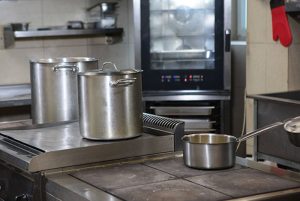
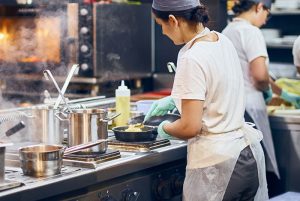
Now, kitchens are still shrinking, but in different ways and for different reasons. It’s a trend that’s taken a left turn into the drive-through lane and is more telling of what appears to be a larger transformation in the industry. Coming Soon: The Shrinking Restaurant Mainstream brands that make up the landscape of QSRs and fast-casuals are downsizing not just the kitchen, but the entire restaurant. As the pandemic accelerated consumers’ migration to off-premises dining, seating has become less important for these restaurant models built on speed and convenience. If they’re not already running delivery-only ghost kitchens out of a converted cargo container in some urban center, they’re unveiling new building design prototypes that sacrifice kitchen AND seating space for multiple drive-thru lanes, curbside pickup, walk-up kiosk ordering and throwback parking-lot dining. Also Coming Soon: The Dine-In Dilemma For the more upscale casual and other dine-in-experience restaurants, a shrinking kitchen is the product of 2020’s shutdown scare. These operators dedicated kitchen space to virtual brands for survival and now that dine-in demand is storming back, they’re faced with a decision to keep the additional off-premises revenue streams going or return their focus to the customer at the table. In any case, the challenges that come with a shrinking kitchen remain, even if they’ve evolved enough to demand a review. Restaurant Service Is Still the Big Challenge In the original blog, the risk was brand erosion. It was about putting too much stress on the kitchen—particularly with the rise, even at that time, in digital ordering and takeout—such that wait times for orders would start to expand. Today, digital technology is more deeply integrated into the restaurant marketplace than ever before. And it’s still evolving at a rapid pace. But is it making it easier to deliver a great customer experience? This recent insight from Restaurant Dive begs the question: •    A report from Oracle finds that increased off-premises business at restaurants is impacting customer expectations for speed of service. Over 20% of restaurant customers are annoyed after waiting two minutes to order at the drive-thru window, which jumps to 70% of customers if the wait is five minutes to order. •    Further, 47% of respondents said they feel like delivery and takeout orders have resulted in longer waits when they’re ordering in person, while 38% of consumers believe dine-in business is less of a priority than digital orders. For the speed-and-convenience operations going all in on digital and off-premises, streamlining those digital service providers as much as possible is key to providing more efficient service. For the dining-experience restaurants, creating a clear operational distinction between dine-in and delivery service—perhaps, even establishing a separate venue for delivery only—is critical. If the labor crunch makes this difficult, it might be time to make that hard decision to drop either the on- or off-premises business. Keeping the Menu Fresh Is More Important Than Ever In 2018, the menu was shrinking too, in part because the smaller kitchen put the squeeze on storage. But the tighter menu has continued to be the order of the day in the face of rising food and inventory costs, labor turnover that has to keep the menu simple and, again, the explosion of takeout and delivery. Today, it’s even more challenging. Because that same consumer who doesn’t want to wait five minutes at the drive-thru also has a shorter attention span for taste preferences. Thriving in this new era takes more menu evolution, which still demands equipment that can fit the space, versatility and durability requirements inherent in a leaner kitchen. But, for those making a bigger commitment to off-premises dining, it demands a smarter strategy to optimize delivery food quality. And, for all segments, the new era also has upped the stakes on limited-time offers. In a smaller kitchen operation, this makes LTO development more challenging because restaurants have to wow their customers without operational extravagance. Finding partners with experience in LTO development becomes imperative and operators must find their sweet spot for innovation frequency and investment. It is possible to get over-extended on projects and, even for fickle customers, it’s also possible to overwhelm your market with too many test items.
Read More »

Foodservice Blog Topics of Choice: Your Peers’ Top 4 After 4

Out of curiosity, this blog takes a look over all of the Nemco blog titles dating back to the first one, How Green Should You Go?, published in the fall of 2017.Merging analytics rankings for ‘most views’ (which titles got the most clicks) with ‘most time on page’ (which titles held readers’ attention the longest), revealed a steadfast trend that threads its way through all sorts of topics and a hot-button challenge that really spares no one in the industry.In case you might have missed it, or if you’re just as curious as we are, here are the top 4 topics Nemco blog readers have found most compelling, and our best analysis of why. 1. The Rise of the Grocerant Published March 26, 2019 Concept innovation, particularly during a time of heightened competition, right up until the fateful events of 2020, has pushed this commentary on grocerants to number one in readership. When fast casuals are boldly asserting themselves and convenience stores are squarely making a run at QSRs, along come these decades-old, but reinspired competitors that cross over many different formats—even full-service. The reason? The consumer demand for fresh. Find out more, including how traditional restaurants can respond. [ READ THE BRIEF ] 2. The Big-Chill Change in Food Holding Published November 21, 2019 The consumer demand for fresh runs headlong into another demand for customization, forcing many operators to get creative with their service offering. The epicenter of the challenge is the traditional, high-maintenance ice bath that few in the industry like, including those in the health department. Clearly, Nemco readers have wanted to know more about this shift. [ READ THE BRIEF ]   3. The Natural Way to Make More Money Published October 8, 2019 Save labor. Anywhere possible. That’s a default practice of foodservice operators, and one that has intensified in the last few years leading up to today’s unprecedented staff-shortage crisis. While many kitchens have found one solution is to inventory precut, prepackaged ingredients, the risk–reward against staying with fresh produce is more out-of-balance than realized. From food safety to optimizing flavor to—there it is again—meeting the demand for fresh, readers are looking at this informative entry to understand the myth about how much precut really serves the bottom line. [ READ THE BRIEF ] 4. Flanking to Win the Restaurant Labor Battle Published July 7, 2021 Dovetailing on the topic of the aforementioned staffing crisis, operators are looking for any ideas they can find to survive this unusually perfect storm of supply–demand pressure. Only a few months old, this blog post has already cracked the top 5 for readership by taking a different angle on the subject—namely, how taking control of the situation goes well outside the obvious objective of hiring. Response might require a creative shift in the service model, or it might be about taking a more thoughtful approach to what’s already in place. [ READ THE BRIEF ]

Read More »

Restaurant Customer Experience on a Shoestring Staff

So, how do operators respond and thrive, without marginalizing their brand, when labor is in such short supply? Here are 4 measures that can make a difference. 1. Reevaluate the Front of the House Doing so usually reveals where smart sacrifices (those that don’t affect food quality) can be made in the name of service. For example, shifting personnel to the FOH in any way possible can pay big CX dividends. On a shoestring staff, it could be as simple as placing one person within reach of the ordering kiosk or making management a little more accessible by, say, taking on some hosting duties. If already feeling the pull towards kitchen automation—which would be understandable, given cooks and line cooks are the most difficult positions to fill right now—a commitment to FOH service might be the deciding factor. Meanwhile, for some upper-scale or full-service establishments, it might be time to introduce a few self-serve options up front. Consumers are aware of the staffing shortages and the circumstances greatly responsible for them. And, yet, they keep coming out to eat. Providing diners with the tools, such as condiment dispensers, to ensure they get the meal they want is something they can appreciate in this unusual time, even if it’s somewhat counter to the brand image they’ve come to expect. 2. Extend Takeout to Curbside Together with online or mobile-app ordering (one restaurant technology diners universally like), covering the short distance from takeout to curbside can go a long way to enhance customer experience. Even if space is limited to, say, a single spot in the street outside the storefront, it can be a worthy service investment—especially given the desire among operators and diners alike to decrease restaurant reliance on third-party delivery providers. 3. Go Beyond Training Employees. Empower Them. Supported by the data that reflects consumer preference for real people over robotic  programming is the argument that enhancing employee experience goes hand-in-hand with customer experience. Cultivating a team of happy employees, no matter how many (or few) are on the roster, translates to a better CX every time. This is about strategy separate from the elephant-in-the-room challenge of employee acquisition. It’s about empowering the people already on staff. Given the opportunity to think and act, whether implementing their own new ideas for improvement (within brand guidelines, of course) or taking initiative and solving customer-service problems without fear of management reprisal, employees begin to take ownership of the enterprise. And that is absolutely invaluable to any business on a number of levels—including customer experience. 4. Enhance Your Loyalty Program At this point, in the wake of the pandemic, the power of loyalty isn’t lost on many restaurant operators, especially among major chain executives. Nearly half of the industry’s diners are enrolled in at least one loyalty program, while digital orders grew 124% from March 2020 to March 2021. That said, the power pays off even more when the goal is perfecting the customer experience. Personalized rewards, for example—such as a free birthday meal or offers customized to the diner’s menu preferences—inspire members to be 7.5x more likely to refer a friend, 6.5x more likely to spend more for the sake of maximizing their points, and 5.4x more likely to continue spending. (2020 Bond Loyalty Report) And then there’s delivery—another preference not lost on operators right now. In a competitive move against rival McDonald’s, Burger King recently went all in on CX, extending its rewards to delivery orders (through its dedicated delivery service, not third parties) as a direct response to the top demand customers expressed in the chain’s guest feedback survey.

Read More »

LTO Food Equipment: 3 Speed-to-Market Mistakes

If inventing a new food-equipment device becomes part of that equation, perfecting the features, advantages, and benefits or, for that matter, honoring the production budget (if there even is one) becomes almost irrelevant. Problem is, when hitting the deadline takes precedent, ‘good enough’ equipment design often isn’t. Here are 3 common mistakes in judgment that might look like worthy sacrifices upfront, only to wind up putting a drag on the process and, perhaps, even sinking your LTO completely. Misjudgment 1: Providing All the Food Equipment Specs Up Front Means Eliminating More Meetings Downstream Yes, knowing your food equipment’s performance specs at the outset and clearly communicating them to your manufacturing partner contributes immensely to an efficient and successful LTO outcome. But if your partner doesn’t stress the importance of ongoing collaboration, even after the most thoughtful and comprehensive kickoff meeting, that’s a red flag. Why? Because the unexpected is going to happen. And it could come from anywhere. If your manufacturing partner is just an order taker, eager to run with your initial specs, the inevitable challenges will translate to unbearable delays. If your partner reviews your specs, then comes to you with a new idea, multiple sign-off phases in the design-development process or, quite frankly, questions that come from shift-on-the-fly experience, that’s not a waste of time. It’s quite the opposite. It’s a wiser call for flexibility that can preempt issues or find shortcuts to better outcomes—all without changing your deadline. Misjudgment 2: Taking Food-Equipment ‘Lab’ Results for Granted If it’s even possible for a foodservice chain to ratchet up emphasis on menu consistency, it’s during an LTO promotion. So, when your new food-equipment device is performing to that tune in its test phases, it can be tempting to press the accelerator without gaining a separate performance assessment from the manufacturing team. If that team is experienced in foodservice, they should have a sense of how the equipment’s ‘lab’ performance will translate to the field. In actual kitchens, chain-wide, holding consistency falls to a much wider range of skilled hands, from the most entrenched franchisee to the newest upstart, from the most seasoned culinary pro down to a cadre of teenagers. This can justify further development to ensure the equipment is easy to train on and use, easy to clean and maintain, and designed to optimize safety. These aspects can seem like sacrificial nice-to-haves when under the gun, but can be difference makers when the LTO is winning customers on taste, yet can’t prove repeatable or can’t hold the profit margin. Misjudgment 3: Assuming Market Testing Is Only About the Market Very closely dovetailing off the first two misjudgments is the tendency to see the food-equipment dimension of the project as simply a means to the end. Carrying the collaboration tenet well past the restaurant trial phases can uncover new LTO fulfillment opportunities and accelerate the process toward actualizing them. Partnerships in development can lead to solutions that fully deploy the menu concept, from, say, warming or other holding solutions that can extend the LTO to carryout or food truck applications, or additional ideas to facilitate menu tweaks in an LTO series—something as simple as introducing a new condiment or sauce to a base item. Going one step further, this kind of follow-through collaboration can also lead to design versatility that expands the equipment’s use beyond the LTO, perhaps to the extent the equipment can still deliver your return on investment should the LTO falter.

Read More »

Flanking to Win the Restaurant Labor Battle

1. Simplify Your Menu During the massive industry shift to takeout and delivery, streamlining the menu was about focusing on foods that travel well and adapting to smaller ghost kitchens. But simplifying the menu has merit in any operation fighting the labor battle. It makes inventory management more efficient and improves meal-prep mastery and speed that can make a big customer-experience difference when fewer hands are on deck. It also makes menu development more efficient. Where the bottom-line impact is more subtle, but no less significant, is at the table. When too many choices can overwhelm patrons, a simpler menu can improve turns and customer satisfaction. 2. Get Your Suppliers on Board The shutdown shock to foodservice has galvanized an industry solidarity and has many E&S manufacturers and distributors being proactive in their efforts to address operator challenges. With labor being the toughest among them, operators should seek out and urge suppliers to focus on solutions specific to manpower. Press for more flexible ordering and delivery scheduling that otherwise seems like asking too much. This is the time when true partnerships are forged. Likewise, when looking at the labor savings of equipment that speeds up the mundane and enables multitasking, give more thought to the comparison of long-term efficiencies against upfront expense. Labor dedicated to excess training or constant maintenance, both often brought on by overengineering, is a price operators can’t afford to pay right now. And staff shortcuts to compensate in those situations threaten to dramatically compound the cost, whether by jeopardizing food safety, food quality or employee safety. Further, impress upon suppliers the need for equipment versatility and durability to minimize recurring new purchases. 3. Automate (without going full humanoid) While the likes of White Castle and Spyce Kitchen are turning to robots, these chains are what are known as early adopters. Apart from the investment itself, it’s the fear of dehumanizing the restaurant experience that makes most operators hesitant about implementing robotics. The truth is automation takes many forms that improve customer experience while simultaneously saving labor. Software applications on both the ordering and cash-out side represent what many consumers want and, in this labor-crisis era, might simply prove necessary. Meanwhile, similar advances in areas that don’t involve customer engagement—from preprogrammed cooking in the kitchen to administrative software to cleaning technology—can pay huge labor-saving dividends and, more important, free your people to perform and serve your customers better. 4. Be a Retention Hawk This is a bit of a cheat on the title of this blog because retention is really aftermath recruiting—at least, it should be—meaning it must become a much more active pursuit. The no-brainer that comes out of all the data on the cost of hiring versus retaining a restaurant employee must now take more thinking and more outside-the-box solutions in all relevant areas, from training and communication to culture and benefits. Ultimately, it’s about being proactive before the crisis gives workers negotiation leverage—and not just by offering more flex time or compensation. For most employees, it’s about sincerity in one’s appreciation, expressed in dollars or even just verbally.

Read More »

Ghost Kitchens and the Call for Food Quality

Sure, takeout and delivery are about satisfying consumers’ convenience demand. But, thanks to the scare of 2020 that brought so many ghosts out of the ground—including the launch of well over 100,000 virtual brands—the off-premises market is understatedly saturated.Knowing that all of these ghost kitchens can’t possibly survive, holding the competitive edge of food quality becomes even more imperative. Here are 4 keys to chasing the ghost with a brand that differentiates on flavor. 1. Start Fresh Speed is important, but the goal for any ghost kitchen serious about food quality should be efficiency—a thread that runs throughout this article. Keeping menus simple and inventory streamlined, all guided by what travels well, has rapidly become gospel in the ghost kitchen. Operations that will separate themselves are those that understand how the fresh-ingredient trend in conventional foodservice holds true in off-premises dining as well. In a ghost-kitchen model that depends on off-premises delivery, optimizing brand impression includes shortening the distance between food prep and consumption anywhere it’s possible—and fresh, versus precut, frozen and prepackaged, does that. Mastering the efficiency of fresh, especially in the potentially high-volume capacity of a dedicated ghost kitchen, is about finding durable and versatile food-prep equipment, adjusting menus seasonally and using local sources when available. 2. Control Your Roster Kitchen United, Reef Kitchens and other macro ghost models create exciting opportunities for operators in this space, in part because they can supply almost everything from the market data to the kitchen itself. They can also supply the labor. That can be necessary to get a new operation off the ground. But, because consistency of experience is so essential to a restaurant brand, having control of the staff is ideal. Again, that might be a daunting challenge (an understatement in the current labor crisis). So, for a delivery brand almost exclusively dependent on consistency of the food, the focus ought to be on controlling the staff actually preparing the meals, leaving  customer-facing, dishwashing and other positions to the larger business entity. 3. Prioritize Delivery Ergonomics Even when narrowing down to the specific ghost-kitchen sector, layout scenarios from one operation to another can be diverse. If efficiency for the purpose of differentiating on food quality is driving every decision, it should prioritize compact equipment design. The intent should be to maximize space for all the critical measures that must be taken after cooking, given delivery’s much longer, winding road to the table. We’re talking about plate finishing that can add a custom flavor or even a rare presentation touch; packing that can single-handedly make or break your food quality at its end point; and, most important, temperature control that starts in the kitchen using holding equipment that’s positioned well for both the cooks and the delivery drivers. Those dedicated to mastering food quality will also look for nuance opportunities in efficiency that can be unique to delivery. Take steak and burgers, for example, which continue to cook after being removed from the heat source. If menu and delivery-logistics planning is integrated for factors like this, the ghost kitchen model can actually serve the food-quality mission quite well. 4. Stay Fresh—as in, Innovate Like a Madman In other words, increase the menu innovation intensity, because the ghost kitchen is an ideal way to dabble. According to DoorDash, other dine-in consumer expectations quickly emerging in the off-premises world are menu-innovation related, such as the demand for more customization and ethnic flavors. Take it up a notch in the ghost scenario, where the menu is so much easier and less expensive to change, from both an operational (nimbler kitchen) and promotional (digital dynamic) standpoint. Not to mention, when the market is so saturated and consumers become overwhelmed or jaded, constantly evolving menu ideas are a must to sustain interest and serve virtual-only marketing efforts that have no brick-and-mortar presence.

Read More »

Off-Premises Dining and What Consumers Want Next

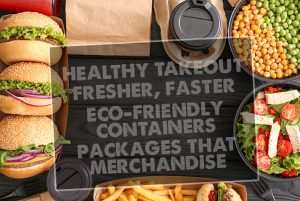
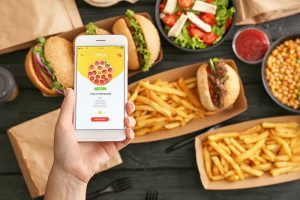
So, what’s next?Naturally, as takeout, delivery and grab-n-go become even more prominent, we can anticipate the equally strong consumer demand for healthier foods to invade the format. Here are 5 important considerations for making the most of the healthy to-go opportunity. 1.   Understand What the Healthy Demand Is All About Largely driven by the Millennial segment, the “healthy” perception is generally not about abandoning foods, say, high in fat or sugar. It’s about choosing higher-quality versions—specifically, foods that are more natural and less processed, with clean ingredient labels. In the pandemic-inspired return to more comfort foods, that can expand your menu beyond kale and quinoa—even for the long haul, as 69% say they’ll likely continue to eat the comfort foods that they rediscovered this past year. 2.   Make Fresh Faster Kitchens that thrive will be those able to migrate further toward new habits and investments that make ‘fresh prepared’ more efficient. Achieving this can involve everything from optimizing kitchen space, particularly in the midst of delivery-only and ghost-kitchen operations that demand a leaner layout, to better inventory management (#5 below) and maintaining shorter menus. The best part about attacking this faster-fresh aspect is how it can present opportunities for other efficiencies in the healthy-meets-convenience demand—such as equipment that simultaneously speeds up food prep, while also supporting root-to-stem usage and controlling portions. 3.   Simplify Flavor Expansion Operators don’t have to fully commit to meal-kit type offerings (though, that’s yet another trend getting legs right now) to turn takeout packing arrangements into a new opportunity. Packing condiments, dressings and sauces in “on-the-side” containers separate from the rest of the to-go order is key to optimizing meal quality while in transit. Hidden in that is an opportunity to expand beyond your traditional ketchup and mustard to introduce new, healthy, house-made flavors that can wow the customer, even when it comes to takeout and delivery’s more conventional best sellers. 4.   Adjust Your Menu for the Road For operators who have been able to resume dine-in, many have developed separate to-go menus, as they’ve come to identify foods that travel better than others. And there are plenty of sources to offer insight on this. In addition, some other quick-hit ideas to keep in mind include: Food holding is critical—whether hot roasted chicken or a cool meal bowl—especially when to-go order volume is part of maintaining delivery-route efficiency. Healthy merges with grab-and-go beautifully in the form of sandwich wraps, sushi rolls and other similar “no-utensils-required” menu items. Order and stock well-known branded prepackaged items you can add as ingredient complements to a meal. Think Blue Diamond nuts for upscale salads. Explore packaging options that are being developed in real time, as part of the innovation happening downstream in this foodservice shift. Consider new ideas in insulated materials, as well as designs that seal well and keep foods stabilized, with hot and cold foods separate. And, for self-serve, grab-n-go applications, look for packages that merchandise much better than your Styrofoam clamshell. Finally, like the healthy movement, the demand for greener restaurant operations is another pre-Covid trend destined to reemerge in this next phase of off-premises dining, with consumers demanding takeout carriers that are more eco-friendly. 5.   Healthy To-Go Profits Call for a Leaner Pantry Improving inventory management is always wise, but becomes even more paramount in this new era. Having a tight, data-centric handle on what’s moving through your kitchen is about reducing costs and optimizing the freshness so critical to high-quality, healthy food deliveries. Another proactive solution that goes hand in hand with this effort to reduce food waste is a steady roll of limited-time offers (LTOs) featuring crafted foods from on-hand ingredients.

Read More »

When Your LTO Hinges on a New Food Equipment Design…

1. “Is Rapid Prototyping All You Got?” Let’s be clear. Rapid prototyping and other advanced engineering-development capabilities are a worthy litmus test for your manufacturing partner—especially in the “hurry-up-and-wait” scenarios so common among LTO projects. But, in a meet-the-deadline partnership, you ought to screen manufacturers for more than just their technical capabilities. Do they have experience, specifically, in the types of foods and applications like those of your current LTO project? The differences between proofing dough, searing beef and holding chilled sauces in open display—even in terms of, say, a nuance in temperature or the energy source to achieve it—are not discoveries you want your manufacturer to be making for the first time on your project. Not when corporate is asking for a status update every day. The same can be said for the equipment design-development process itself. Generally speaking, manufacturers are wired to take on new challenges. Enthusiasm for venturing into the realm of custom-design food equipment in a chain-wide LTO shouldn’t be mistaken for experience. Do they have a structured process and is it something you can see and discuss up front? Furthermore, does that process have clear milestones when you will be able to review the progress and sign next-phase authorization? Finally, how collaborative, flexible and accessible is the manufacturer? Are they able and willing to remain closely involved throughout the LTO project, not just at the prototype level, but all the way through initial and market testing? Some of the most successful ideas, measured by their impact on LTO profitability or brand-building differentiation, as much as equipment performance, don’t emerge until then. 2. Performance Requirements. Know Them. When an LTO project veers off the fast track, a nebulous food-equipment concept is often among the usual suspects. Somewhere between when the menu item becomes tangible (the recipe is ready to test, the flavor is certifiably craveable, the idea fits the brand, the presentation is “Instagrammable,” etc.) and when your chain’s marketing wheels start turning—which, happens earlier than ever now—the practical, repeatable kitchen objectives of your new equipment device should be defined. Have your performance specs all but cast in stone, to get the prototype ball rolling quickly and to streamline its evaluation phases later on. But, also, keep an open mind. To meet those specs, the equipment design options that come back to you from the qualified manufacturer might not be what you expected. Trust your design team. 3. Count Your Cooks It’s no coincidence that the cliché for projects slowed by democracy has its roots in the kitchen. If speed-to-market is your top priority, your internal equipment-development project team and approval process should be clearly defined as well. Keep it as small as possible, with a uniform understanding of the objectives and urgency. For rapid approvals, establish the proper hierarchy and flow, with direct lines of communication, including a contingency plan for potential role-player changes. We all know about turnover in the foodservice business. 4. Check the Check. Is It Really Blank? Let’s face it. Even when meeting the LTO launch deadline is so important that “cost is no object,” cost is still an object. At some point. As early in the equipment-development process as possible, establish some parameters for the sake of speed. For example, when the performance requirements come into form during checkpoint 2, and subsequent equipment costs start to rise above initial estimates, knowing your cost threshold, and whether or not you’ll have to make performance trade-offs, is a serious time-saving plus. Also, be aware that prototypes and tooling are often much more expensive than the final product, and they involve up-front costs. To avoid what can become a frustrating delay, request pre-authorization to pay for those prototypes.

Read More »

Foodservice Trends & Equipment Strategies in 2020

1. ‘Six Sigma’ Kitchens Under the Pressure of Fresh Wibel: Consumers’ restaurant spending, especially as a percentage of their total food budget, is hitting an all-time high this year. Meanwhile, their demand for fresher foods continues to ratchet up. To keep pace and maintain margins, operators really have to take a page out of our book as a manufacturer and begin to think in terms of ‘lean manufacturing.’ One aspect of this is what, in our world, we call J.I.T., for “just-in-time” delivery of components to keep production as efficient as possible. Well, moving from precut and packaged ingredients to fresh, while it can be a big labor investment, it doesn’t have to be. Considering fresh produce is actually designed by nature to maintain a longer shelf life over precut, with the right prep equipment, fresh can really become a J.I.T. model of efficiency. Carcione: Fresh will force operators to examine every detail of cost control in ways many of them haven’t before. To Michelle’s point, labor will be a major factor, as it always has been, with respect to more efficient prep and cooking. But, now, we’re talking about details in kitchen layout. Literally, the steps employees are taking. We’re talking about cleanup and maintenance procedures. But, also, back on the equipment side, operators will have to find ways to more tightly control food costs by preventing waste that may occur through over-portioning or as a result of discarding foods that weren’t held at correct temperatures, whether hot or cold. And, because of this movement toward fresh, inspectors are getting even more critical of food holding. 2. Off-Premises Dining Becoming a Do-or-Die Scenario Carcione: Takeout and delivery is no longer an added revenue-stream option. It’s got to be part of your business model. I mean, now you have ghost kitchens. So, operations need smaller and more versatile equipment that can keep kitchens lean and nimble. Plus, because speed of service is even more crucial in an off-premises model, equipment purchases should also emphasize performance reliability or backup planning or both to stay immune to any kind of equipment downtime that can dent the brand or maybe even be business fatal. Operators will also have to look at workstations designed specifically for delivery/pickup, with modular options for heated, chilled and ambient holding. And, rather than hand orders to customers when they arrive, some might use a locker-type model of holding where they’ll text the customer a combination to his or her order. So, they’re running takeout without any customer interaction at all. Wibel: What’s interesting about this trend is the mobile-app generation has a lot to do with the growth. But these same folks are also the ones leading the charge for more food ‘experiences.’ So, why is eating restaurant food at home now preferred? Well, convenience is a big part of that. But I also suspect it has something to do with expectations. Are restaurants giving consumers an experience that makes leaving the house worthwhile? For many operators, there’s an opportunity to make the restaurant more of a destination that brings business inside the building—either by offering menu items not available for takeout and delivery or just a really unique, fun dining experience. 3. Value Brands Creating an Equipment-Buying Quandary Carcione: As the industry sees more lower-price equipment options coming in from offshore manufacturers, many of which are improving in quality compared to what has historically been produced in that part of the world, there are a couple of things to keep in mind. The quality differences are still there, but they’re not as obvious on their face. So, depending on what operators need or expect, the purchase decision should involve a little more investigation. Second is the trade war and the pricing fluctuations related to it. Even with the most recent signs of some movement towards a possible agreement, there is still quite a bit of uncertainty around the issue. It could take a while to unfold this next year and, being an election year, anything could happen. So, dealers and volume buyers might ask suppliers about their sourcing capabilities beyond China. Wibel: Adding to Joe’s comments about the quality differences and the buying decision, the improvement of imports is such that they now round out a true good–better–best scenario on the dealer’s shelf, which means operators now have options that can align with the appropriate scenario they might be facing. For operators who are on a razor-thin margin or are facing a more uncertain future—like, say, a startup or an independent that’s trying to compete in a saturated market—a less expensive, ‘good’ import might make sense. For other operators, especially chains, the value proposition is not a lower initial investment, but buying once and using the same piece of equipment for years to come.

Read More »

the Big-Chill Change in Food Holding

1. Consumers Want Fresher Foods While this colossal movement has been pervasive throughout the entire food industry for several years, it continues to impose ripple-effect changes that are somewhat new. For instance, the depth of the demand has kitchens not only changing menu items, but also switching out afterthought staple ingredients for those that now introduce food-holding requirements. A shelf-stable artificial strawberry syrup, for example, is being replaced with a natural strawberry juice that requires refrigeration. In some cases, it might not present a major challenge. But, in others, particularly where conventional refrigeration is out of the question—like self-serve—it can create difficulties. And why is self-serve or, more broadly, consumer point-of-use so important? 2. Consumers Want More Food-Customization Options If one half of the broader consumer demand for “dining experiences” is continuously evolving menu innovation, the other half is hands-on customization. Technomic saw this coming on quickly in 2016 when its report, Trends Shaping Foodservice Through 2020, cited that “72% of consumers expect DIY options at restaurants.” Whether it involves patrons building their own pizzas, salads and sandwiches, or simply adding house-made and other unique condiments and dressings to their plates, satisfying this DIY flavor diversity can’t happen without a mix of chilled options. Neither, of course, can it happen (not efficiently, at least) without self-serve concepts that, for chilled-food holding, create unique challenges—which, incidentally, are about to get tougher . . . 3. Health Departments Are Going Cold on Conventional Ice Baths Even if a chain or operator is all in on serving the customization craze, it’s often a bite-the-bullet decision, because it calls for holding chilled foods on open ice—a notorious maintenance nightmare scenario, even for reliable staff. But here’s why it’s becoming an even bigger issue. These same trends that are moving the industry toward fresher foods are also sharpening the health inspector’s eye on food-borne illness prevention. And that means they’re getting even stricter about holding consistently precise food temperatures. If ice baths were already a major maintenance pain, the pressure is intensifying. And effective alternatives that are a practical fit in a self-serve space are difficult to come by. Operators who understand these market forces can see the related challenges as opportunities and leverage them to strengthen their own brands in a hyper-competitive foodservice industry.

Read More »